Award-winning custom 3D printing. Shipping to Ireland, UK, Europe, Iceland and USA. See the details
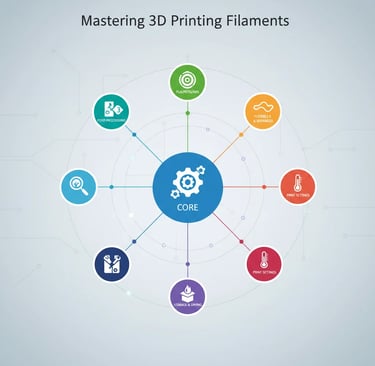
Mastering 3D Printing Filaments: Your Essential Material Guide
Embarking on a 3D printing journey, whether for hobby, home, or business, inevitably leads to a crucial question: "Which filament should I use?" The answer isn't always straightforward, as the world of 3D printing filament types is vast and varied, each offering unique properties and best-suited applications. From the robust strength of engineering-grade plastics to the flexible embrace of innovative composites, your choice of material dictates everything from print quality and durability to the functional success of your final product.
Here at PrintIn3D.ie, Ireland's award-winning custom 3D printing service, we understand that navigating these options can be daunting, especially if you're new to the technology or seeking specific performance from your custom 3d parts printing online. This comprehensive pillar page is designed to be your authoritative hub, demystifying the most common and specialised filament types, explaining their characteristics, and guiding youtowards informed decisions. Whether you're conceptualising prototypes, creating bespoke home décor, crafting unique tech accessories, or seeking robust replacement parts, understanding your filament options is the first step to turning your digital designs into tangible reality.
We'll delve into the foundational plastics like PLA and PETG, explore the capabilities of engineering materials such as ABS and ASA, and even touch upon the exciting realm of specialty filaments. Our goal is to empower you with the knowledge to select the perfect material for your next project, ensuring satisfaction and optimal results. Let's unlock the potential of 3D printing, together.
Table of Contents
The Foundation: Understanding 3D Printing Filaments
PLA: Your Gateway to 3D Printing Excellence
PETG: Balancing Strength, Durability, and Accessibility
ABS and ASA: The Engineering-Grade Powerhouses
TPU & Flexible Filaments: The World of Elasticity
Specialty Filaments: Beyond the Basics & Into Innovation
Choosing the Right Filament for Your Project: A Decision Guide
Filament Quality, Storage, and Best Practices for Optimal Prints
Filaments for Business & Industrial Use: Scaling Your Innovation
The Role of 3D Printing Services in Filament Choice and Success
Eco-Friendly & Sustainable Filaments: Printing with a Conscience
The Foundation: Understanding 3D Printing Filaments
At the heart of every Fused Deposition Modelling (FDM) 3D printer lies the filament – a thermoplastic thread that is heated and extruded layer by layer to form a three-dimensional object. Understanding these fundamental materials is crucial for anyone engaging with additive manufacturing, whether you're a seasoned maker or just getting started with online 3d printing Ireland. Filaments are essentially plastic polymers, often coiled onto spools, which are fed into the printer's hotend. There, they are melted to a semi-liquid state and precisely deposited onto the print bed, gradually building up the desired form.
The vast array of 3D printing filament types available today means that almost any application, from simple decorative items to high-performance engineering prototypes, can be catered for. Each type boasts a unique set of physical properties, including strength, flexibility, heat resistance, surface finish, and even specific functionalities like conductivity or biodegradability. Choosing the correct filament is paramount, as it directly impacts the success, durability, and aesthetic appeal of your printed model. Using the wrong material could lead to failed prints, components that don't perform as expected, or items that simply don't look the part.
Common filaments like PLA and PETG are popular for their ease of use and versatility, making them ideal for a wide range of everyday objects and prototypes. More advanced materials, such as ABS and nylon, offer superior mechanical properties, making them suitable for functional parts that require greater strength or heat resistance. Then there's the exciting world of flexible filaments like TPU, perfect for creating soft, rubbery objects. Beyond these, specialty filaments infuse plastics with other materials like wood fibres, metal particles, or carbon fibre, opening up even more creative and practical possibilities.
When you're looking for online custom 3d printing quotes, the type of filament you select will be a significant factor in determining the final cost and production feasibility. Our expertise at PrintIn3D.ie allows us to guide you through these choices, ensuring that the material aligns perfectly with your design's requirements and intended use. Whether you're creating 3d printed models to buy online or developing custom components, starting with a solid understanding of filament fundamentals is key to achieving exceptional results.
Ultimately, the filament is the raw ingredient that brings your digital designs to life. Familiarising yourself with the characteristics and applications of various 3D printing filament types will not only enhance your printing success but also broaden the scope of what you can create. Let's dive deeper into specific materials.
PLA: Your Gateway to 3D Printing Excellence
Polylactic Acid, or PLA, stands as the most popular and widely recommended filament for beginners and experienced users alike, and for good reason. It's renowned for its ease of use, making it an excellent starting point for anyone exploring the capabilities of 3D printing. PLA is a biodegradable thermoplastic derived from renewable resources like corn starch, tapioca roots, or sugarcane, giving it a more environmentally friendly profile compared to many other plastics. This bio-origin also means it often has a slightly sweet smell when heated, which is far more pleasant than the pungent odours associated with some other materials.
One of PLA's primary advantages is its printability. It requires lower extrusion temperatures and doesn't demand a heated bed, although using one can improve adhesion and prevent warping. Prints with PLA typically have excellent layer adhesion, resulting in smooth finishes and fine details. It's also less prone to warping and shrinking than other materials, which significantly reduces the likelihood of failed prints. This makes it a fantastic choice for decorative items, prototypes where exact mechanical properties aren't critical, and educational projects. Many of the 3d printed models you can buy online for home decor or display are often made from PLA due to its aesthetic qualities and ease of production.
However, PLA does have its limitations. While reasonably strong, it is more brittle than materials like ABS or PETG, meaning it can snap under stress rather than flex. Its low glass transition temperature means it can soften and deform in higher heat environments (around 60°C). This makes it unsuitable for parts exposed to direct sunlight for extended periods, car interiors, or functional components that experience significant heat or stress. For items requiring more durability or heat resistance, other 3D printing filament types would be a better choice.
Despite these caveats, PLA remains a workhorse in the 3D printing community. Its versatility shines through in a myriad of applications, from intricate figurines and architectural models to functional jigs and fixtures for light-duty tasks. It's also available in an incredibly wide spectrum of colours and finishes, including metallic, silk, glow-in-the-dark, and transparent options, allowing for immense creative freedom. For rapid prototyping or creating stunning visual pieces, PLA is often the first and best choice. When considering online custom 3d printing quotes for a project where aesthetics and ease of print are key, PLA is often the most cost-effective and reliable option to bring your CAD designs to life.
PETG: Balancing Strength, Durability, and Accessibility
Polyethylene Terephthalate Glycol, commonly known as PETG, has rapidly grown in popularity, establishing itself as a fantastic middle-ground option among 3D printing filament types. It cleverly combines many of the benefits of PLA, such as ease of printing, with the enhanced durability and temperature resistance found in more industrial materials like ABS. This makes it an incredibly versatile material, suitable for a broader range of applications than PLA alone, especially when you need parts that can withstand a bit more wear and tear.
One of PETG's standout features is its impressive strength and toughness. Unlike PLA, which can be brittle, PETG is much more impact-resistant and flexible, allowing it to bend slightly before breaking. This characteristic makes it ideal for functional parts, mechanical components, and items that might be subjected to stress or frequent handling. Furthermore, PETG boasts a higher temperature resistance than PLA, typically maintaining its form up to around 80°C, making it suitable for applications where moderate heat exposure is a concern. It also exhibits excellent chemical resistance, which adds to its appeal for a variety of practical uses.
From a printing perspective, PETG is generally considered more challenging than PLA but significantly easier than ABS. It usually requires a heated bed to prevent warping, and its slightly stringy nature might require some tuning of retraction settings on your printer. However, once dialled in, PETG can produce prints with a beautiful glossy finish and excellent layer adhesion, ensuring robust and long-lasting products. Its adhesion to the build plate can sometimes be too strong, so proper bed preparation (like using blue painter's tape or a PEI sheet with glue stick) is often recommended to prevent damage to the print surface.
Common applications for PETG include functional prototypes, protective components, outdoor parts, and items requiring a balance of strength, flexibility, and transparency – it's often used for clear or translucent containers due to its properties. For those looking for durable replacement parts 3d printing Ireland or custom enclosures, PETG is an excellent choice. When you leverage an online custom 3d printing quotes service like PrintIn3D.ie, choosing PETG means opting for a material that delivers reliability without the common complexities of more advanced engineering plastics. Its balance of properties makes it a go-to for many of our clients seeking robust and practical custom 3d parts printing online.
Read the full guide on PLA vs PETG for 3D Printing ↗
ABS and ASA: The Engineering-Grade Powerhouses
When projects demand superior mechanical strength, impact resistance, and a higher tolerance for heat, Acrylonitrile Butadiene Styrene (ABS) and Acrylonitrile Styrene Acrylate (ASA) step into the spotlight as prime choices among 3D printing filament types. These materials are well-established in traditional manufacturing, used extensively in everything from car parts to LEGO bricks, and their properties translate effectively into the realm of 3D printing, especially for functional prototypes and end-use parts.
ABS is renowned for its toughness and durability. It offers excellent impact resistance, making it less brittle than PLA, and boasts a higher glass transition temperature (around 105°C), meaning it can withstand significantly more heat before deforming. This makes it a popular choice for parts that need to operate in warmer environments or experience mechanical stress. However, ABS is more challenging to print with. It requires a heated bed, often enclosed printing environment, and careful temperature control to prevent significant warping and delamination (layers separating). It also produces fumes during printing that require good ventilation. Despite these challenges, its strength and post-processing capabilities (like acetone smoothing for a high-gloss finish) make it invaluable for specific applications.
ASA is often considered the "next generation" ABS, specifically engineered to overcome some of ABS's shortcomings, particularly its susceptibility to UV degradation and yellowing when exposed to sunlight. ASA shares many of ABS's desirable mechanical properties – high strength, impact resistance, and heat deflection – but adds superior UV stability and weather resistance. This makes ASA an ideal material for outdoor applications, marine components, or any part that will be exposed to the elements. While still requiring a heated bed and good ventilation, ASA tends to warp less than ABS, making it slightly easier to print in some instances. It also produces less noticeable fumes compared to ABS.
Both ABS and ASA are excellent choices for creating replacement parts 3d printing Ireland where robust performance is crucial, or for developing strong, durable prototypes for small businesses. They are frequently used for automotive parts, outdoor enclosures, tool handles, and functional components that must endure demanding conditions. For businesses in Ireland leveraging 3d printing for small businesses ireland, opting for these engineering-grade filaments through an online custom 3d printing quotes service ensures that their innovative designs meet the highest standards of reliability and performance. While requiring more careful consideration during the printing process, the benefits of ABS and ASA in terms of durability and environmental resistance are unmatched for specific high-performance applications, transforming your CAD concepts into truly resilient physical products.
TPU & Flexible Filaments: The World of Elasticity
The landscape of 3D printing filament types isn't just about rigid plastics; it also includes an exciting category of flexible, elastic materials that open up a whole new realm of possibilities. Thermoplastic Polyurethane, or TPU, is the most prominent and widely used flexible filament, known for its rubber-like elasticity, exceptional durability, and impressive abrasion resistance. Unlike rigid plastics, TPU prints can bend, stretch, and compress, returning to their original shape, making them perfect for applications requiring shock absorption, grip, or flexibility.
TPU's unique properties make it ideal for a multitude of practical uses. Think about items that need to withstand repeated bending or impact: phone cases, wearable tech components, gaskets, seals, vibration dampeners, protective covers, shoe insoles, and even drone parts. Its high tear and abrasion resistance ensure that objects made from TPU are not only flexible but also incredibly resilient and long-lasting, far outperforming brittle plastics in demanding environments. This makes it a prime candidate for replacement parts 3d printing Ireland that need to be pliable, such as a custom grommet or a flexible connector.
While the results are highly rewarding, printing with TPU can be more challenging than with rigid filaments. Its flexibility can make it prone to tangling in the extruder or causing underextrusion if not handled correctly. Slower print speeds, a direct-drive extruder (if available), and careful management of retraction settings are often necessary to achieve successful prints. A heated bed can help with adhesion, but sometimes a cold bed with an adhesive like glue stick can also work well. Despite the learning curve, mastering TPU unlocks the ability to create truly functional and unique objects that would be impossible with standard rigid materials.
At PrintIn3D.ie, we regularly use flexible filaments for various on demand 3d printing custom orders, from bespoke protective gear to unique custom tech accessories. If you have a design that requires an elastic component, such as a custom phone case or a flexible grip for a tool, TPU is likely the answer. When you request online custom 3d printing quotes for a flexible part, you are tapping into a material that can truly bring dynamic functionality to your designs, ensuring your custom 3d parts printing online not only look great but also perform exactly as intended. Its ability to absorb shock and resist wear makes it an invaluable addition to the 3D printing material palette.
Read the full guide on Frequently Asked Questions About 3D Printed Phone Cases ↗
Specialty Filaments: Beyond the Basics & Into Innovation
Beyond the core 3D printing filament types like PLA, PETG, ABS, and TPU, lies an exciting and rapidly expanding universe of specialty filaments. These materials are engineered to imbue 3D prints with unique aesthetic, functional, or mechanical properties that go far beyond standard plastics. They push the boundaries of what's possible with FDM printing, allowing for creations that mimic natural materials, conduct electricity, or offer significantly enhanced strength. Exploring these specialty options opens up incredible avenues for customization and innovation for online 3d printing Ireland.
One popular category is composites, where base plastics (often PLA or PETG) are infused with particles of other materials. This includes:
Wood-filled filaments: Containing wood fibres, these filaments print with a realistic wood-like texture and can even be sanded, stained, or painted like real wood. They are perfect for decorative items, architectural models, or artistic pieces where a natural aesthetic is desired.
Metal-filled filaments: Infused with fine metal powders (like copper, bronze, stainless steel), these offer a metallic appearance and heavier feel. While they don't possess the full strength of solid metal, they can be polished to a shine, creating stunning artistic or prop pieces.
Carbon Fibre reinforced filaments: These incorporate chopped carbon fibres into a base plastic (like nylon, PETG, or ABS). The carbon fibres significantly increase the stiffness, strength, and dimensional stability of the print, making them ideal for high-performance functional parts, drone frames, or jigs and fixtures where weight reduction and rigidity are critical.
Glass Fibre reinforced filaments: Similar to carbon fibre, glass fibre additions enhance strength and stiffness, often offering better impact resistance while remaining more electrically insulating than carbon fibre.
Other specialty filaments offer unique functionalities:
Conductive filaments: Embedded with carbon particles, these can conduct electricity, making them suitable for low-voltage circuits, touch sensors, or electromagnetic shielding applications.
Glow-in-the-dark filaments: These contain phosphorescent pigments that absorb light and emit a glow in the dark, perfect for novelty items, safety markers, or unique decorative prints.
Colour-changing filaments: These react to temperature (thermochromic) or UV light (photochromic), changing colour based on environmental conditions, offering interactive and dynamic prints.
Abrasive filaments: Some materials like Carbon Fibre, Glass Fibre, or even glow-in-the-dark filaments can be quite abrasive due to their added particles. These require hardened steel nozzles to prevent excessive wear on standard brass nozzles.
When considering specialty filaments for your on demand 3d printing custom orders, it's important to weigh the desired aesthetic or functional outcome against the increased complexity of printing and often higher cost. However, for projects that demand a specific look, feel, or performance characteristic, these materials are indispensable. At PrintIn3D.ie, we can advise you on the best specialty filament options for your unique custom 3d parts printing online, helping you transform your most ambitious 3d printed models you can buy online concepts into reality.
Choosing the Right Filament for Your Project: A Decision Guide
With such a diverse range of 3D printing filament types available, deciding on the best material for your specific project can feel overwhelming. The key is to approach the decision systematically, considering the intended function, environment, aesthetic requirements, and budget for your print. Making the right choice ensures your custom 3d parts printing online not only looks good but also performs exactly as needed, preventing wasted time and resources.
Here are the crucial factors to consider when selecting a filament:
Intended Use & Functionality:
Is it decorative or functional? For decorative items, prototypes, or models where aesthetics are paramount and no significant stress is involved, PLA is often sufficient due to its ease of printing and wide colour range.
Does it need to be strong and durable? If the part will experience impact, bending, or mechanical stress, PETG, ABS, ASA, Nylon, or carbon fibre reinforced filaments are better choices. These are ideal for replacement parts 3d printing Ireland.
Does it need to be flexible? For gaskets, seals, phone cases, or parts requiring elasticity, TPU is the material of choice.
Will it be exposed to heat or sunlight? High-temperature applications require ABS, ASA, or Nylon. For outdoor use with UV exposure, ASA is superior to ABS.
Environmental Factors:
Indoor or Outdoor? PLA is best for indoors. PETG and especially ASA are good for outdoor use due to UV and weather resistance.
Chemical Exposure? PETG offers good chemical resistance.
Aesthetic Requirements:
Surface Finish: PLA often produces smooth, matte finishes. PETG can be glossy. ABS can be smoothed with acetone for a high-gloss look.
Colour & Texture: Consider the vast colour ranges and special finishes (wood-like, metallic, silk, glow-in-the-dark) offered by various filament types, especially PLA and specialty filaments.
Printing Requirements & Complexity:
Ease of Printing: PLA is the easiest. PETG is moderately challenging. ABS, ASA, and flexible filaments like TPU require more skill and specific printer setups (e.g., heated bed, enclosure).
Printer Compatibility: While most FDM printers can handle PLA and PETG, some advanced materials might require specific hotends, nozzles (e.g., hardened steel for abrasive filaments), or printing conditions.
Cost & Budget:
Filament Cost: Generally, PLA is the most affordable, followed by PETG. ABS/ASA are slightly more expensive, and specialty/engineering-grade filaments can be significantly pricier. When getting online custom 3d printing quotes, material cost is a key factor.
Production Volume: For 3d printing for small businesses ireland or 3D printing in bulk, economies of scale might make certain materials more viable.
When you provide us with your CAD file for on demand 3d printing custom orders, we can help you choose the ideal filament. Our expertise in online 3d printing Ireland ensures that your chosen material aligns perfectly with your project's demands, resulting in high-quality, functional, and aesthetically pleasing custom 3d parts printing online. Don't hesitate to consult with our team to find the perfect match for your vision, whether you're creating 3d printed gadgets to buy online or bespoke industrial components.
Filament Quality, Storage, and Best Practices for Optimal Prints
Even with the perfect choice of 3D printing filament types, achieving consistent, high-quality prints relies heavily on the quality of the filament itself and how it's stored and handled. Filament is not a "set it and forget it" material; proper care and attention to best practices can significantly impact your print success rates and the longevity of your materials. This is particularly important for online custom 3d printing quotes and on demand 3d printing custom orders, where precision and reliability are paramount.
Filament Quality: Not all filaments are created equal, even within the same material type (e.g., PLA from different manufacturers). Key indicators of quality include:
Diameter Consistency: High-quality filament maintains a very tight tolerance (e.g., 1.75mm +/- 0.02mm). Inconsistent diameter leads to extrusion issues, layer gaps, or clogs.
Purity: Cheaper filaments can sometimes contain impurities that can lead to clogs or poor print quality.
Colour Consistency: Good quality filament will have uniform colour throughout the spool.
Winding: Neatly wound spools prevent tangles, knots, and jams during printing.
Investing in reputable brands, such as those compatible with advanced systems like Bambu Lab, often pays dividends in reliability and print quality. At PrintIn3D.ie, we prioritise high-quality filaments to ensure the best results for yourcustom 3d parts printing online.
Proper Storage: The biggest enemy of 3D printer filament is moisture. Most filaments, especially PETG, Nylon, and TPU, are hygroscopic, meaning they readily absorb moisture from the air. Moist filament can lead to a host of printing problems:
Bubbling/Popping: Water inside the filament boils in the hotend, causing steam bubbles that disrupt extrusion.
Poor Layer Adhesion: Moisture weakens the plastic bonds, leading to brittle prints.
Stringing & Blobs: Inconsistent extrusion due to moisture causes unsightly defects.
Reduced Strength: Final prints may be weaker and more brittle.
To combat this, store filaments in airtight containers, ideally with desiccant packets (silica gel). Vacuum-sealable bags are also an excellent option. For already saturated filament, a filament dryer or a food dehydrator can be used to dry it out, restoring its printability.
Best Printing Practices:
Temperature Tuning: Always refer to the manufacturer's recommended print temperatures (hotend and bed) and perform temperature towers to find the optimal settings for your printer and filament.
Bed Adhesion: Ensure your print bed is clean and properly prepared (e.g., glue stick, hairspray, or specific bed surfaces) to prevent prints from detaching mid-print.
Calibrations: Regularly calibrate your printer's E-steps, flow rate, and bed levelling.
Nozzle Maintenance: Inspect and clean your nozzle regularly. Abrasive filaments (e.g., carbon fibre filled) require hardened steel nozzles to prevent rapid wear.
By adhering to these best practices,youcan significantly enhance your success with online 3d printing Ireland, ensuring that every project, from simple 3d printed models you can buy online to complexCADprototypes for 3d printing for small businesses ireland, turns out exactly as intended. Our commitment at PrintIn3D.ie includes ensuring optimal filament handling, so you always receive top-tier quality prints.
Read the full guide on Bambu Lab Filament vs. Third-Party ↗
Filaments for Business & Industrial Use: Scaling Your Innovation
The application of 3D printing extends far beyond hobbyist creations; it's a transformative technology for businesses, enabling rapid prototyping, custom tooling, and even small-batch manufacturing. For enterprises engaging in 3d printing for small businesses ireland, selecting the right 3D printing filament types is paramount to ensuring products meet industrial standards for performance, durability, and cost-effectiveness. This is where the choice of material directly impacts the functionality and market readiness of your innovations.
Prototyping & Iteration: For early-stage prototyping, speed and cost are often key. PLA is an excellent choice for visual models and basic fit checks due to its ease of printing and affordability. However, as prototypes become more functional, materials like PETG or even ASA become indispensable. They offer mechanical properties closer to end-use parts, allowing for rigorous testing in realistic conditions. For businesses developing new products, the ability to rapidly iterate using different filament types, from low-cost PLA to high-performance Nylon or PC, significantly accelerates the design cycle and reduces overall development costs.
Jigs, Fixtures & Custom Tooling: Manufacturing floors often benefit immensely from 3D printed jigs, fixtures, and custom tools. These require materials that can withstand repeated use, impacts, and sometimes specific chemical or thermal environments. ABS, ASA, and especially carbon fibre reinforced filaments (like PA-CF or PETG-CF) are ideal for these applications. Their high stiffness, strength, and dimensional stability ensure that the tools remain accurate and reliable, directly improving manufacturing efficiency and quality control. This is a prime example of where on demand 3d printing custom orders can provide significant value.
Small-Batch Manufacturing & Replacement Parts 3D Printing Ireland: For businesses requiring limited runs of custom components or urgent replacement parts, 3D printing offers an agile alternative to traditional manufacturing. Materials like PETG, Nylon, and PC (Polycarbonate) are frequently chosen for these applications due to their robust mechanical properties. Nylon offers excellent strength, flexibility, and abrasion resistance, making it suitable for gears, bearings, or tough connectors. Polycarbonate, known for its extreme toughness and heat resistance, is used in demanding engineering applications. When you need custom 3d parts printing online for production, these industrial-grade filaments ensure your components meet stringent performance criteria.
Specialised Requirements: Some industries have unique material demands. For example, medical prototypes might require biocompatible filaments, while electronics enclosures could benefit from conductive or ESD-safe materials. The ability to access a wide range of specialized 3D printing filament types through a service like PrintIn3D.ie allows businesses to innovate without investing in costly in-house machinery or material inventories. We help translate your CAD files into tangible, high-performance parts, offering competitive online custom 3d printing quotes for bulk orders or complex industrial components. Our expertise is your advantage in bringing sophisticated 3d printed gadgets to buy online or custom industrial solutions to market efficiently.
Read the full guide on How to Use a 3D Printing Service for Your Invention Prototypes ↗
The Role of 3D Printing Services in Filament Choice and Success
For many individuals and businesses, navigating the complex world of 3D printing filament types, printer settings, and optimal print conditions can be a significant barrier to entry. This is precisely where a professional 3D printing service like PrintIn3D.ie becomes invaluable. We bridge the gap between your innovative CAD designs and the tangible reality, handling all the technical complexities of material selection and printing execution, especially for online custom 3d printing quotes and on demand 3d printing custom orders.
Expert Material Guidance: Our team possesses deep expertise in a wide array of 3D printing filament types, understanding the nuances of each material's properties, printing requirements, and best-suited applications. If you're unsure whether PLA, PETG, ABS, TPU, or a specialty filament is right for your project, we can provide tailored advice. We'll discuss your part's intended use, environmental exposure, desired aesthetics, and budget to recommend the most appropriate material, ensuring your custom 3d parts printing online yields optimal results.
Access to Advanced Materials & Equipment: An individual or small business might not have the budget or space for a vast inventory of filaments or a fleet of high-end 3D printers, some requiring specialised setups like enclosures for ABS or hardened nozzles for abrasive materials. A professional service provides access to a broad spectrum of materials, including engineering-grade plastics and specialty composites, printed on state-of-the-art machines. This allows you to experiment with different materials and achieve complex prints without significant upfront investment. For example, our use of Bambu Lab printers ensures precision and quality across various filaments.
Optimised Printing & Quality Assurance: Beyond material selection, the actual printing process requires meticulous attention to detail. Factors like print speed, layer height, infill density, support structures, and temperature settings are all critical. Our experienced technicians at PrintIn3D.ie optimise these parameters for each specific filament and design, minimising common issues like warping, stringing, or poor layer adhesion. This translates into reliable, high-quality 3d printed models you can buy online, whether for prototyping, replacement parts 3d printing Ireland, or finished goods. We handle the intricacies, so you don't have to.
Efficiency & Scalability: For 3d printing for small businesses ireland or those requiring larger volumes, a service offers scalability. We can produce multiple parts concurrently, ensuring faster turnaround times for 3d printing in bulk orders. This efficiency is invaluable for meeting tight deadlines and managing production surges. By partnering with us for your online 3d printing Ireland needs, you gain not just a printing service, but a reliable manufacturing partner dedicated to bringing your ideas to life with precision and expertise.
Read the full guide on Understanding 3D Printing Costs: Your Guide to Fair Pricing ↗
Eco-Friendly & Sustainable Filaments: Printing with a Conscience
As 3D printing technology continues its rapid expansion, so too does the conversation around its environmental impact. The good news is that advancements in material science are bringing forth a growing range of eco-friendly and sustainable 3D printing filament types, allowing makers and businesses to print with a conscience. Embracing these materials is not just about environmental responsibility; it can also be a significant selling point for 3d printed models you can buy online and for businesses committed to greener practices.
PLA: The Naturally Biodegradable Choice: As mentioned earlier, PLA (Polylactic Acid) leads the pack in terms of biodegradability among common filaments. Derived from renewable resources like corn starch, it's compostable under industrial composting conditions. This makes it a much more sustainable option than petroleum-based plastics like ABS or PETG, especially for disposable prototypes, educational models, or short-term decorative items. While it won't break down in your backyard compost bin, its lower environmental footprint during production and its potential for industrial composting make it a highly attractive choice for environmentally conscious projects.
Recycled Filaments: Giving Plastics a Second Life: A significant step towards sustainability is the use of recycled filaments. These are made from post-consumer or post-industrial plastic waste that is processed, shredded, melted, and extruded into new filament. You can find recycled versions of common 3D printing filament types like rPLA, rPETG, and rABS. By choosing recycled filaments, you contribute to reducing plastic waste in landfills and decrease the demand for virgin plastic production. The quality of recycled filaments has improved dramatically, with many brands offering performance comparable to their virgin counterparts.
Bio-Composites and Alternative Materials: Innovation in sustainable filaments is constantly evolving. Beyond standard PLA, researchers are developing bio-composites that blend PLA with other natural fibres (e.g., hemp, coffee grounds, bamboo) to enhance properties or create unique aesthetics with an even lower environmental impact. There are also efforts to create filaments from other novel bio-based polymers that offer specific properties like greater heat resistance or flexibility, without relying on fossil fuels. These materials are opening new doors for truly green on demand 3d printing custom orders.
Reducing Waste in the Printing Process: Beyond the filament itself, sustainable 3D printing also involves responsible practices. This includes optimising designs to reduce material usage, recycling failed prints or support material where possible, and reusing packaging. At PrintIn3D.ie, we are committed to sustainable practices, from efficient printing processes to reusing filament boxes for deliveries, ensuring that your online 3d printing Ireland experience is as eco-friendly as possible. When you consider online custom 3d printing quotes, inquiring about sustainable filament options demonstrates a forward-thinking approach that aligns with global environmental goals.
Conclusion & Call to Action
The journey through the diverse landscape of 3D printing filament types reveals a world of incredible possibilities, where the right material can transform a simple CAD design into a functional masterpiece or a stunning artistic creation. From the user-friendly nature of PLA to the robust strength of ABS, the flexibility of TPU, and the innovative properties of specialty composites, each filament plays a vital role in expanding the frontiers of what you can achieve with additive manufacturing.
Understanding these materials empowers you to make informed decisions, ensuring that your custom 3d parts printing online projects, whether for personal passion or 3d printing for small businesses ireland, are successful, durable, and precisely tailored to their intended use. At PrintIn3D.ie, we pride ourselves on being your trusted partner in this exciting domain. As an award-winning service in Ireland, we combine expert knowledge with state-of-the-art technology to deliver exceptional quality and reliability for all your online custom 3d printing quotes and on demand 3d printing custom orders.
Ready to bring your ideas to life with the perfect filament? Don't let material choice be a barrier. Upload your design today and get an instant quote, or explore our collection of ready-made 3d printed models to buy online, from unique home decor to essential tech accessories. Our friendly WhatsApp support is always on hand to guide you, ensuring a hassle-free and risk-free experience. Experience the PrintIn3D.ie difference – where your vision meets award-winning quality and customer care.
One stop shop for all things 3D
Upload your 3D files for hassle-free printing.
Award-winning custom 3D printing, 3D scanning and 3D design in Ireland and Europe, with fast WhatsApp support.
Help and Support
Know about the latest offers
info@printin3d.ie
+353899605778
© 2026. All rights reserved.